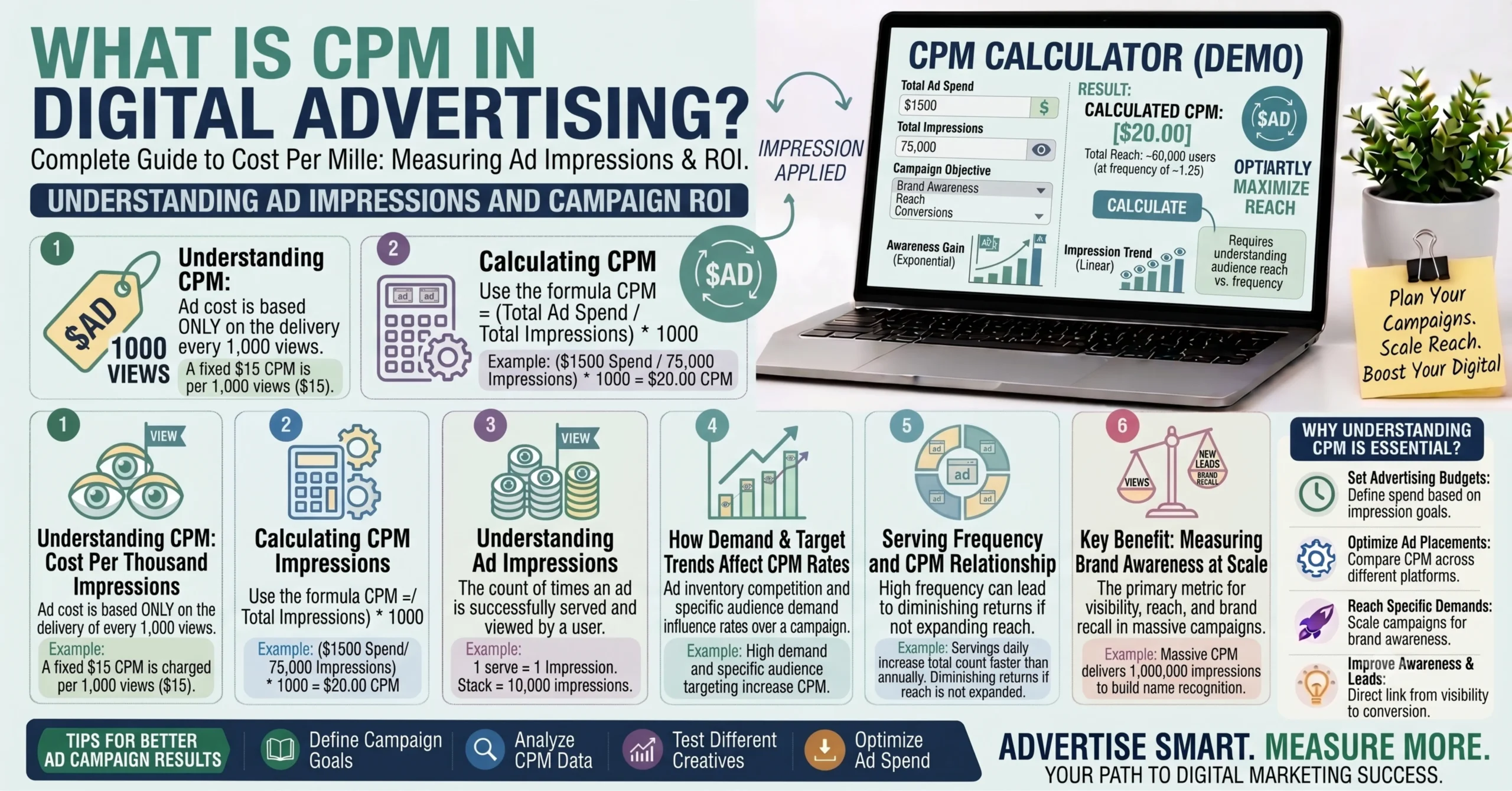
What is CPM in Digital Advertising? Complete Guide
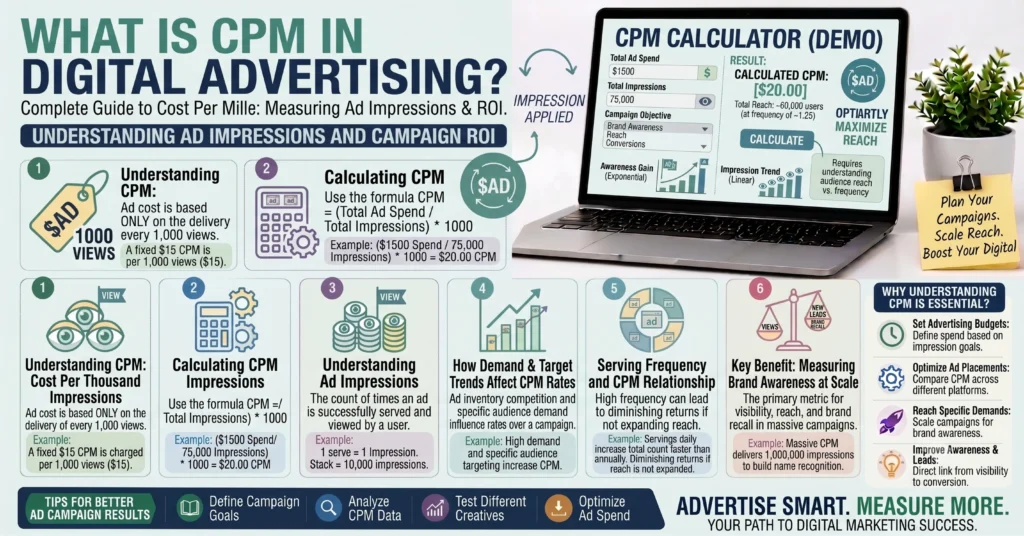
Every time you open Google Ads, Facebook Ads Manager, or any programmatic advertising platform to set up a campaign, one of the very first decisions you have to make is how you want to pay for your ads. Among the handful of pricing models available, CPM is one of the oldest, most widely used, and for many first-time advertisers one of the most misunderstood.
Understanding CPM is not just useful trivia. It directly affects how you budget campaigns, how you compare performance across platforms, and whether you are actually getting good value for your advertising spend. Advertisers who do not understand CPM often end up overpaying for reach they do not need, or underestimating how much a campaign will actually cost before it even launches.
In this guide, we will break down exactly what CPM means, how it is calculated, how it compares to other pricing models like CPC and CPA, and practical strategies to get more value out of every dollar you spend on digital advertising.
What is CPM?
CPM stands for Cost Per Mille “mille” being the Latin word for thousand. It represents the cost an advertiser pays for every 1,000 impressions their ad receives, regardless of whether anyone actually clicks on it.
An “impression” simply means the ad was displayed and loaded on a user’s screen. CPM is one of the oldest pricing models in digital advertising, inherited directly from traditional print and broadcast media, where advertisers paid based on estimated audience reach rather than direct response.
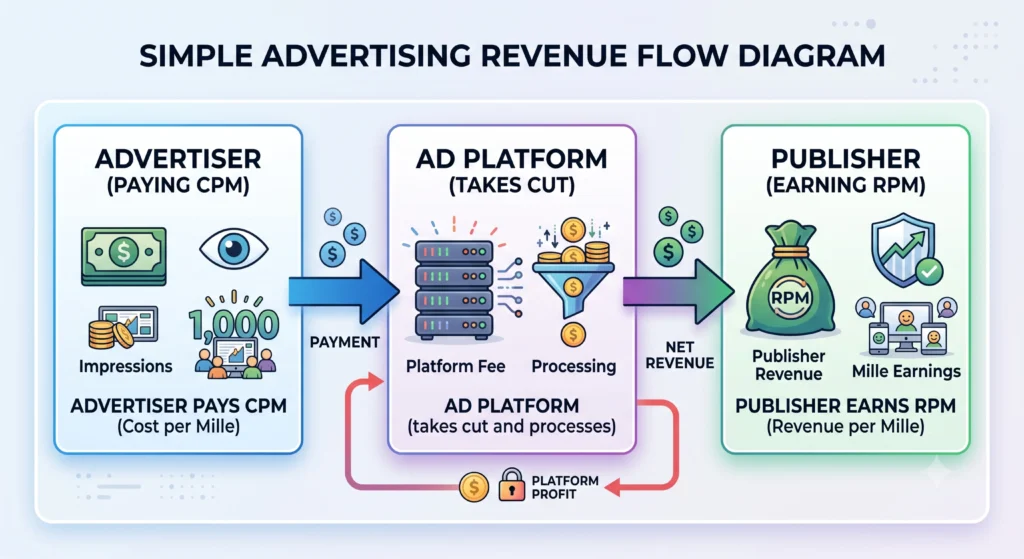
CPM is the advertiser’s side of the ad economy equation. As we discussed in our guide on RPM in AdSense, RPM measures what a publisher earns per 1,000 impressions, while CPM measures what an advertiser pays per 1,000 impressions. The two are directly connected, just viewed from opposite sides of the transaction.
The CPM Formula
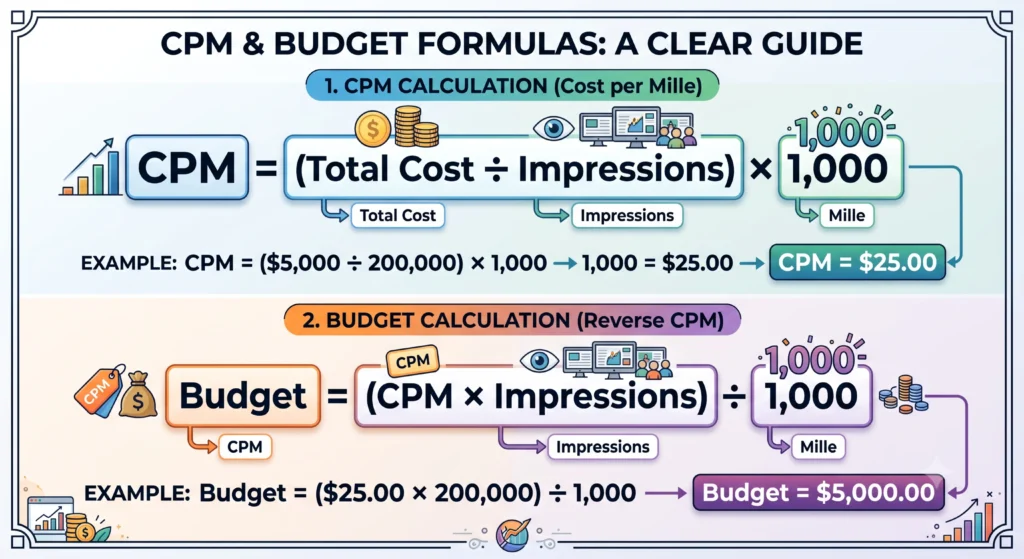
- CPM = (Total Campaign Cost ÷ Total Impressions) × 1,000
This formula can also be rearranged depending on what you already know:
- To find your total budget: Total Cost = (CPM × Impressions) ÷ 1,000
- To find expected impressions: Impressions = (Budget ÷ CPM) × 1,000
Worked Examples
- Example 1 (Finding CPM): Campaign Cost: $300 | Impressions: 120,000 | CPM = $2.50
- Example 2 (Finding Budget): Target CPM: $4.00 | Target Impressions: 200,000 | Budget = $800
- Example 3 (Finding Impressions): Available Budget: $500 | Platform CPM: $6.25 | Impressions = 80,000
Rather than working through this math manually, you can enter any two known values into our free CPM Calculator at InnovaiTools and instantly find the third whether that is your CPM, your required budget, or your expected impressions.
CPM vs CPC vs CPA Choosing the Right Pricing Model
CPM is just one of three major pricing models advertisers can choose from, and picking the right one depends entirely on your campaign goal.
- CPM (Cost Per Mille): You pay for impressions, regardless of clicks or conversions. This model is best suited for brand awareness campaigns, where your primary goal is visibility and reach rather than immediate action.
- CPC (Cost Per Click): You pay only when someone clicks your ad. This model is better suited for traffic-driving campaigns where you want to pay specifically for engaged visitors rather than passive views.
- CPA (Cost Per Action/Acquisition): You pay only when a specific action occurs a purchase, a sign-up, a form submission. This model is the most performance-focused and typically carries the highest cost per unit.
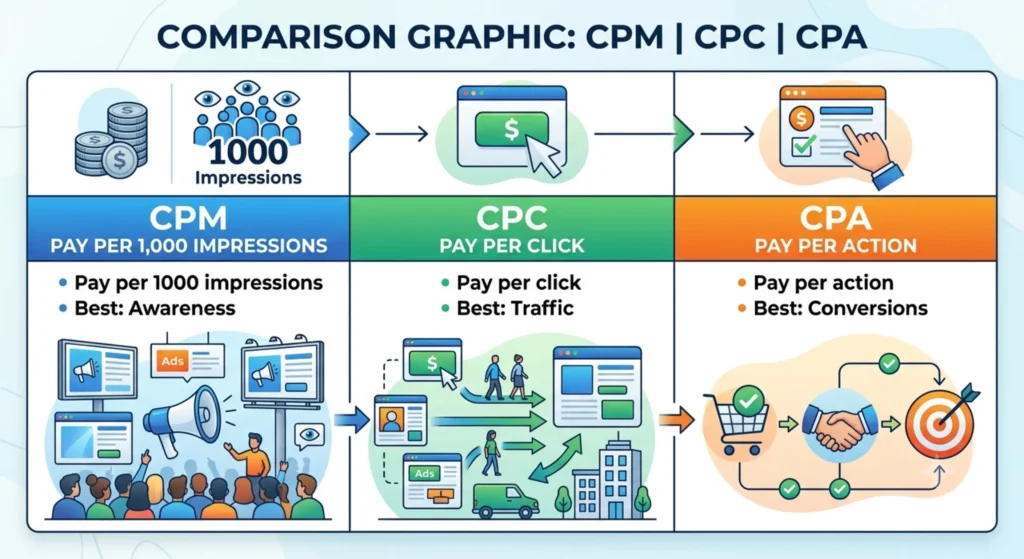
As a general rule: use CPM when your goal is awareness, CPC when your goal is traffic, and CPA when your goal is direct conversions.
CPM vs RPM Two Sides of the Same Transaction
It is worth clearly separating these two closely related terms, since they are often confused. CPM is what the advertiser pays per 1,000 impressions. RPM is what the publisher earns per 1,000 impressions or pageviews.
If you are running campaigns as an advertiser, CPM is your key metric. If you are monetizing a website or channel as a publisher, RPM is what matters to you. If you manage both sides, understanding both metrics gives you a complete picture of how digital ad spend flows through the ecosystem.
What is a Good CPM?
Like most advertising metrics, “good” is relative and depends heavily on your platform, audience, and industry:
- Search and display network: Typically lower CPMs due to abundant, less-targeted inventory.
- Social media (Facebook/Instagram): Moderate range, reflecting precise targeting and engagement.
- Professional/B2B (LinkedIn): Higher CPMs, driven by high-value business decision-maker audiences.
- Competitive Industries (Finance/Insurance): Highest CPMs across platforms due to high customer lifetime value.
Rather than chasing an industry benchmark, track your own CPM over time and correlate it with actual campaign results a higher CPM that drives strong conversions is often better value than a low CPM that drives none.
Factors That Affect CPM
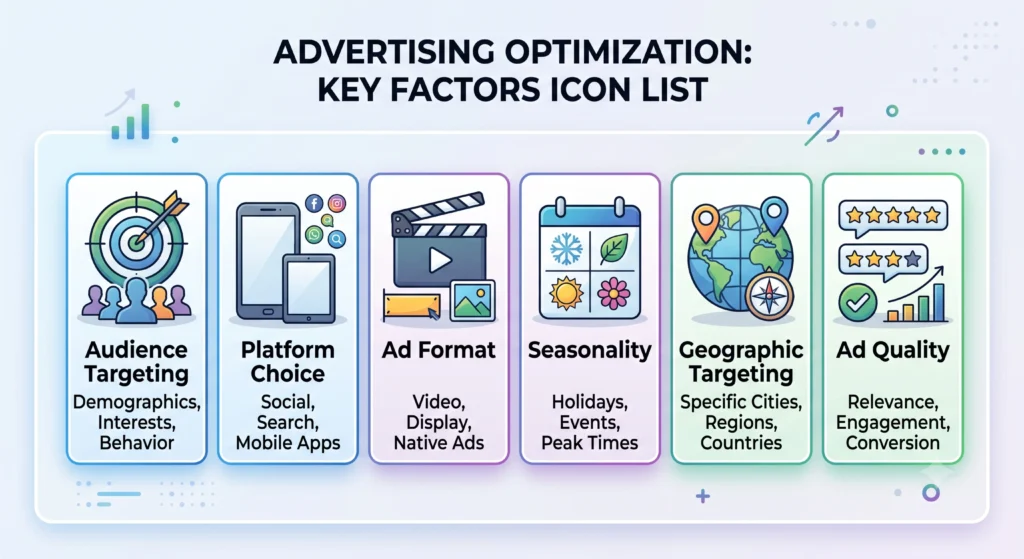
- Audience Targeting Specificity: Narrow audiences command higher CPMs due to intense competition for that limited pool.
- Platform Choice: Supply and demand dynamics vary significantly between platforms.
- Ad Format: Video ads typically carry higher CPMs than static display ads.
- Seasonality: CPMs spike during high-demand periods like the Q4 holiday season.
- Geographic Targeting: Tier 1 markets see higher CPMs than lower-income regions.
- Ad Quality: Platforms reward relevant, high-performing ads with lower effective CPMs.
- Competition Level: More bidders in the auction naturally drive CPMs higher.
How to Use the InnovaiTools CPM Calculator
Our free CPM Calculator handles all three directions of the CPM formula:
- Open the CPM Calculator on InnovaiTools.
- Choose what you want to calculate CPM, total budget, or expected impressions.
- Enter your two known values.
- Click Calculate.
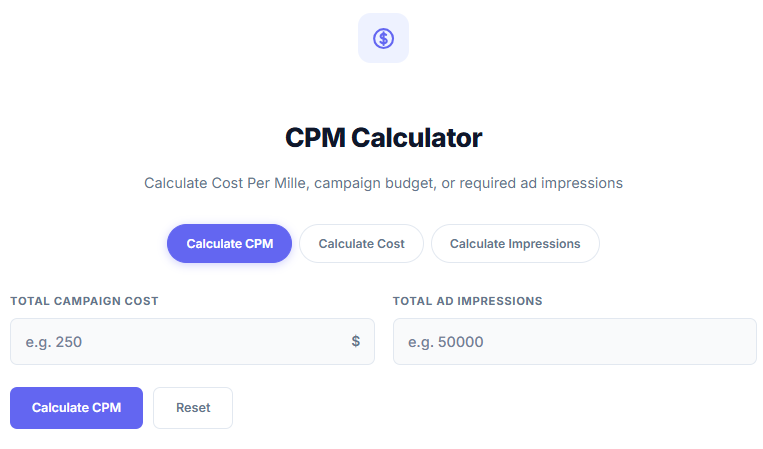
Use this tool before launching any campaign to sanity-check your budget, or after a campaign to evaluate your spending efficiency.
How to Get More Value From Your CPM Budget
- Improve Ad Relevance: Investing in strong creative and precise targeting pays off in better effective rates.
- Balance Targeting: Avoid overly narrow targeting that drives costs up, but maintain enough specificity to reach interested users.
- Test Multiple Creatives: Let platforms optimize delivery toward whichever creative performs best.
- Monitor Ad Frequency: Cap your frequency to prevent wasted spend on audience fatigue.
- Select Correct Objectives: Align your campaign goal (awareness vs. conversion) with the platform’s optimization algorithm.
- Consider Direct Deals: For large campaigns, negotiating directly with publishers can secure more predictable rates.
- Time Campaigns Strategically: Avoid peak-demand periods where possible to secure lower rates.
CPM Across Different Advertising Platforms
Different platforms structure their marketplaces differently:
- Google Display Network: Massive scale, typically accessible baseline CPMs.
- Facebook/Instagram: Engagement-driven auction system where relevance influences cost.
- YouTube Ads: Blends video CPM pricing with audience targeting, often sitting between display and premium video rates.
- LinkedIn Ads: Premium pricing for a high-value B2B audience.
When comparing platforms, always factor in audience quality alongside the raw CPM number.
Frequently Asked Questions About CPM
Q1: What does CPM stand for? CPM stands for Cost Per Mille, representing the cost an advertiser pays for every 1,000 ad impressions.
Q2: How is CPM different from CPC? CPM charges based on impressions shown; CPC charges only when someone clicks the ad.
Q3: What is a good CPM? It varies by platform and industry. Focus on tracking your own performance relative to campaign results rather than industry averages.
Q4: Why is my CPM higher than expected? Common causes include narrow targeting, high competition, premium placements, or seasonal spikes.
Q5: Does a lower CPM always mean better performance? No. A low CPM can waste budget on uninterested users, while a higher CPM with better targeting often yields higher ROI.
Q6: How is CPM related to RPM? CPM is what advertisers pay; RPM is what publishers earn after platform fees. They are opposite sides of the transaction.
Q7: Can I calculate my required budget from a target CPM? Yes, use ourCPM Calculatorto calculate budget, impressions, or CPM instantly.
Q8: Which advertising platform has the lowest CPM? Broad-reach platforms with large inventory, like the Google Display Network, often offer lower baseline rates.
Q9: Does ad format affect CPM? Yes, video ads generally carry higher CPMs than static ads.
Q10: Is this CPM Calculator free? Yes, theInnovaiTools CPM Calculatoris free to use with no sign-up required.
Final Thoughts
CPM might look like a simple number, but understanding what drives it allows you to plan and evaluate campaigns strategically. Before your next launch, use our free CPM Calculator to sanity-check your goals. Remember, the goal is not just the lowest CPM it is the best value for your intended results.
And if you are curious about the other side of this equation, check out our complete guide to RPM in AdSense for the full picture.

Arid is a web developer and computer expert who specializes in building practical utility web applications. With a strong focus on technical problem-solving and user experience, he develops efficient online calculators and writing tools designed to help students, bloggers, and professionals streamline their daily tasks.