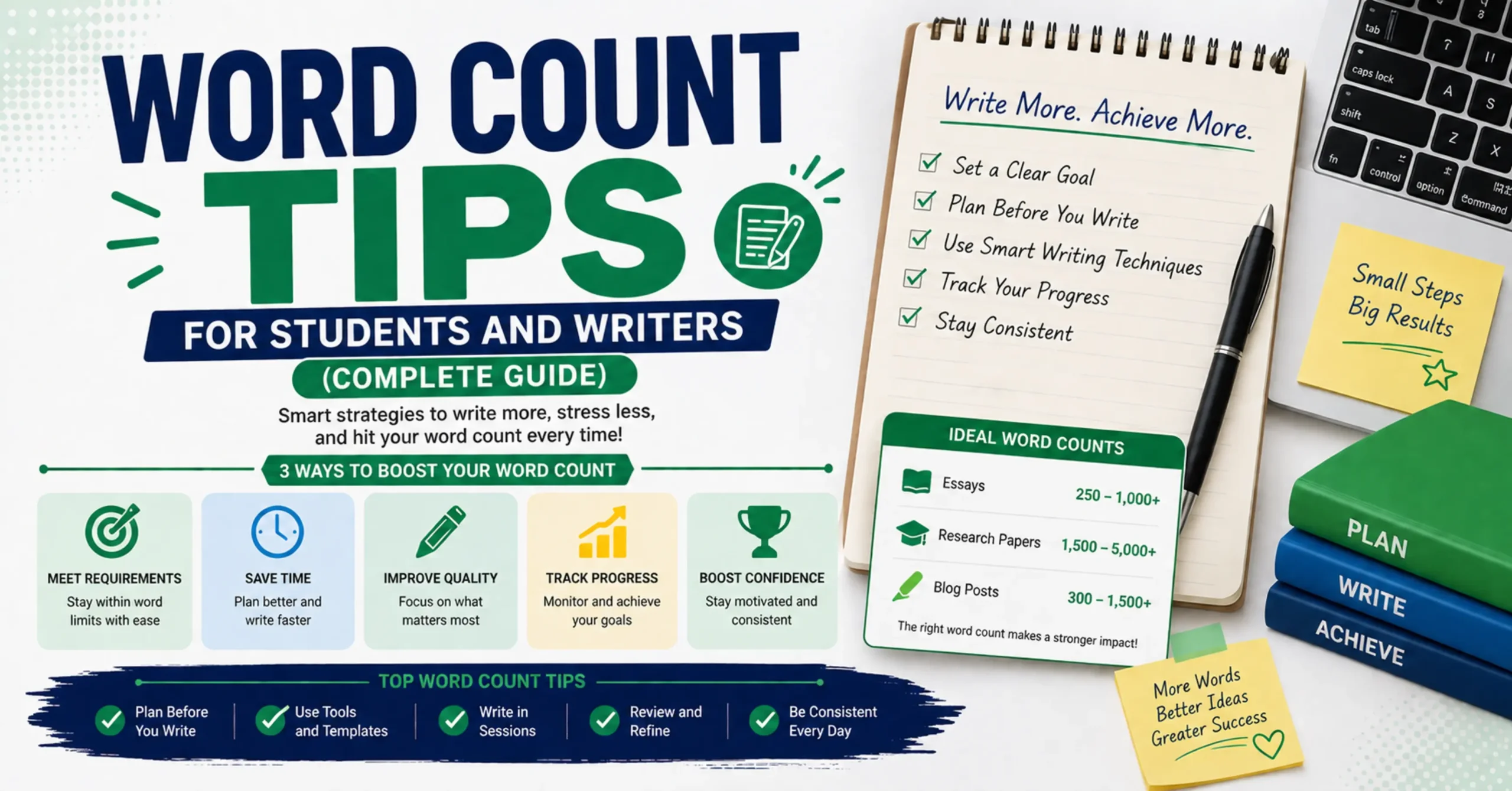
Word Count Tips for Students and Writers (Complete Guide)
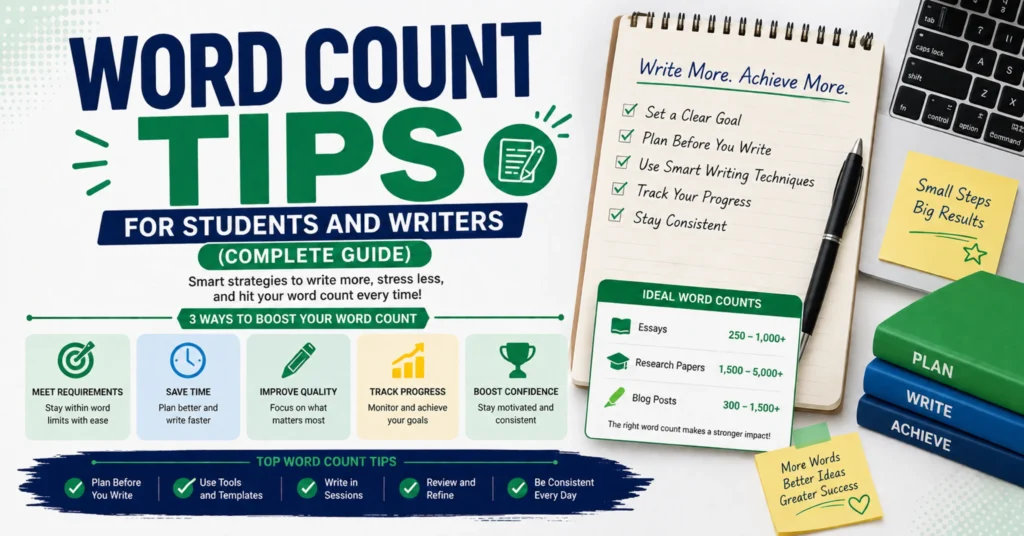
Few numbers cause as much last-minute stress as a word count. A student staring at an essay that’s 200 words short of the requirement. A blogger wondering if their post is long enough to rank on Google. A job applicant unsure if their cover letter is too long to hold a recruiter’s attention. In every one of these situations, the underlying question is the same: how many words is actually right for this piece of writing?
The honest answer is that it depends entirely on what you’re writing and most people have never seen the full picture of word count expectations across different formats. This guide covers exactly that: standard word count benchmarks by document type, the real difference between word count and character count, practical techniques to expand or trim your writing without damaging its quality, and tips tailored specifically for students and for writers.
Why Word Count Matters
Word count is simply the total number of words in a piece of text, but it functions as a proxy for several things readers and evaluators actually care about depth of coverage, respect for the reader’s time, adherence to formatting rules, and in many academic and professional contexts, direct compliance with an explicit requirement.
Missing a word count target can carry real consequences: academic essays under the minimum may signal insufficient analysis, blog posts that are too short may fail to rank in search engines, and cover letters that run too long often go unread past the first paragraph. Understanding word count expectations and having a fast, accurate way to check them removes one entire category of avoidable mistakes from your writing process.
Word Count vs Character Count — What’s the Difference
This distinction trips up more people than you’d expect, especially when moving between different platforms with different limits.
- Word count measures the number of space-separated words in a text.
- Character count measures every individual character letters, numbers, punctuation, and often spaces regardless of how those characters are grouped into words.
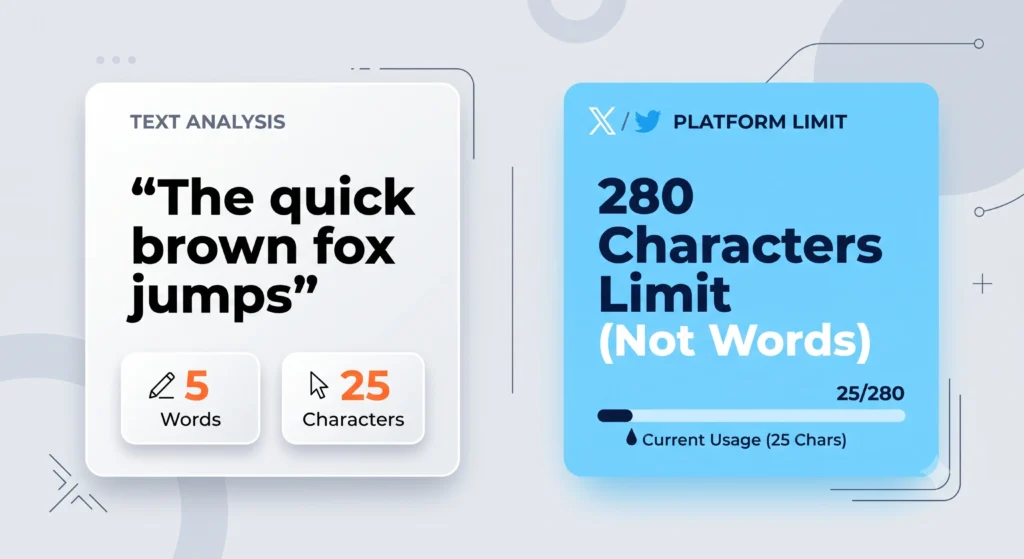
The practical difference matters because some limits are word-based while others are character-based. Academic essays, articles, and books are almost always measured in words. Social platforms like X (formerly Twitter) and SMS messages are measured in characters X allows 280 characters per post, not 280 words, which is why a post using several long words fills up much faster than one using short words.
As a quick example: “The quick brown fox jumps” is 5 words but 25 characters (including spaces). A sentence using longer words, like “Extraordinarily unprecedented circumstances,” is only 3 words but 44 characters nearly double the character count with fewer than half the words.
Standard Word Count Guidelines by Document Type
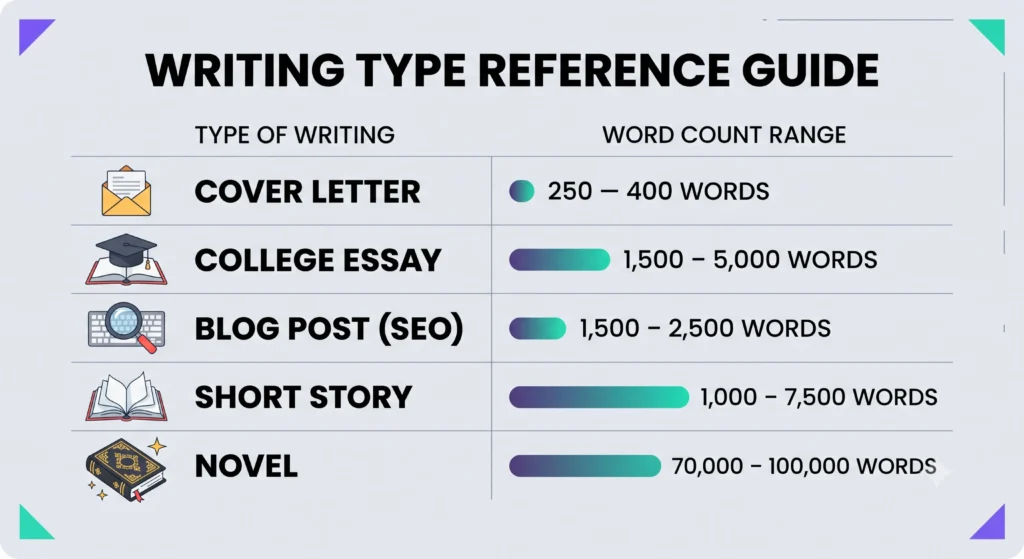
One of the most searched questions around word count is simply “how long should this be?” Here are commonly accepted ranges across the most common document types:
- High School Essay: 500 to 1,000 words
- College Essay: 1,500 –5,000 words, depending on course level and assignment type
- Research Paper or Thesis Chapter: 3,000 –10,000+ words
- Cover Letter: 250 – 400 words
- Resume: No strict word count typically kept to one to two pages using concise bullet points
- SEO Blog Post: 1,500–2,500 words for competitive search topics, though shorter posts can rank well for less competitive queries
- News Article: 300–800 words
- Short Story: 1,000–7,500 words
- Novella: 20,000–50,000 words
- Novel: 70,000–100,000 words, varying significantly by genre
- Professional Email: 50–200 words
- Press Release: 400–500 words
These figures are general benchmarks, not strict rules always defer to a specific requirement given by a professor, publisher, or job application when one is provided.
How to Estimate Word Count Manually (Quick Method)
For a printed page or handwritten document where retyping isn’t practical, you can estimate word count quickly using a sampling method:
- Step 1: Count the words in three representative lines of the document.
- Step 2: Divide by 3 to find the average words per line.
- Step 3: Multiply that average by the total number of lines in the document.
Estimated Word Count = Average Words Per Line × Total Number of Lines
This method won’t be perfectly precise, but it gets you within a close enough range for quick planning purposes without retyping an entire document.
How to Use the InnovaiTools Word & Character Counter
For an exact, instant count, our free Word & Character Counter is the fastest method available.
- Open the Word & Character Counter on InnovaiTools.
- Type directly into the box, or paste your existing text.
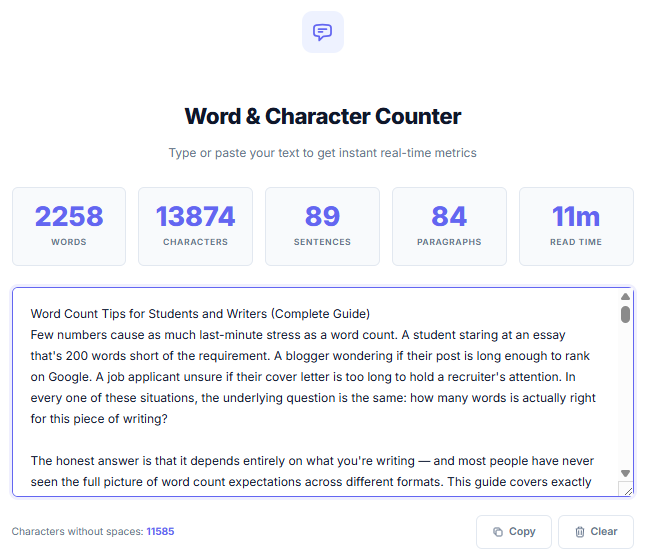
- View your live word count, character count (with and without spaces), sentence count, and estimated reading time all updating in real time as you type.
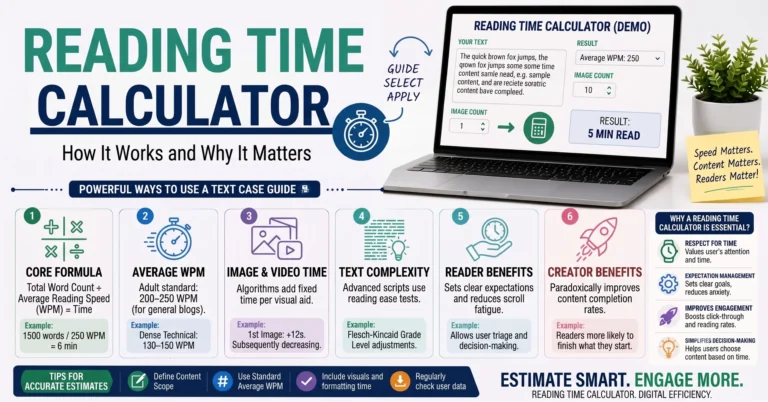
- If you’re checking reading time specifically for a blog post or script, our dedicated Reading Time Calculator gives a more detailed breakdown across different reading speeds.
Because the tool runs entirely in your browser, your text is never sent anywhere, making it safe to paste even early, unpolished drafts.
How to Hit Your Word Count Without Padding
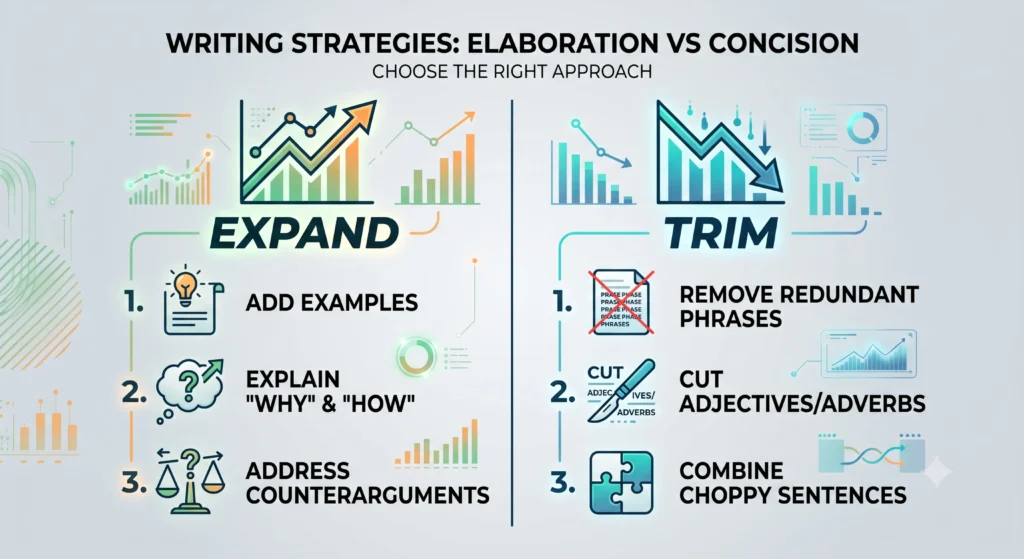
When you’re short of a target, the temptation is to add filler but padding is usually obvious to readers and graders alike. The more reliable approach is to deepen what you’ve already written rather than restating it in different words. If you’ve made a claim, follow it with a concrete example or piece of supporting evidence instead of repeating the same idea in slightly different phrasing. Most underdeveloped writing also makes this mistake: it states a point without explaining the reasoning behind it, so pushing past the “what” to explain the “why” or “how” naturally adds substantive length rather than empty words. For persuasive or analytical writing specifically, addressing a counterargument or an alternative perspective is one of the most effective ways to add real depth, since it shows you’ve considered the topic from more than one angle rather than just asserting a single view. What you want to avoid throughout is filler phrasing like “it is important to note that” or “in today’s society” these add word count without adding value, and experienced readers and graders tend to notice immediately.
How to Cut Down Your Word Count Without Losing Meaning
When you’re over the limit, cutting well is a skill in itself, and a few small habits go a long way. Redundant phrases are usually the easiest place to start “due to the fact that” becomes “because,” and “in order to” becomes simply “to,” and these small swaps add up quickly across a full document. Beyond individual phrases, look at your sentence structure: several short, choppy sentences covering the same idea can often merge into one cleaner sentence without losing any information. Words like “very,” “really,” and “quite” are usually the next easiest cut, since they rarely add meaningful information on their own. It’s also worth scanning for passive voice “the report was written by the team” becomes “the team wrote the report,” which is both shorter and clearer. Finally, if you’ve used three examples to illustrate one point, keeping only the strongest one is often the single most effective trim available, since it usually strengthens the writing while meaningfully reducing length.
Word Count Tips for Students
For students specifically, the first step is always confirming exactly what counts toward the limit some instructors exclude the title, headers, and reference list from the total, while others include everything, and assuming the wrong convention can leave you further from the target than you realize. It also helps to write first and adjust length second; trying to hit an exact word count while you’re still developing your ideas usually produces weaker writing than drafting freely and trimming or expanding afterward. Checking your draft against the requirement well before the deadline, rather than the night before, gives you time to properly adjust rather than rushing a last-minute fix. And while most institutions allow some tolerance often around 10% above or below the stated limit this isn’t universal, so it’s worth confirming the specific policy with your instructor rather than assuming.
Word Count Tips for Writers and Bloggers
For writers and bloggers, the most important shift in thinking is that longer is not automatically better, especially for SEO. A focused 1,200-word post that fully answers what the reader is searching for often outperforms a padded 2,500-word post that doesn’t. Before writing, it’s worth checking what’s currently ranking for your target keyword, as a rough guide to the depth of coverage search engines are rewarding for that specific topic right now. Once you’re writing, breaking up longer content with clear subheadings matters more than the raw word count itself readers judge length partly by how manageable a page feels to scan, and well-structured long content actually reads faster than poorly structured short content. If you’re writing fiction rather than articles, it’s also worth understanding genre expectations, since a thriller and a literary novel carry very different typical word counts, and agents or publishers often screen submissions against these unwritten norms.
Common Mistakes When Tracking Word Count
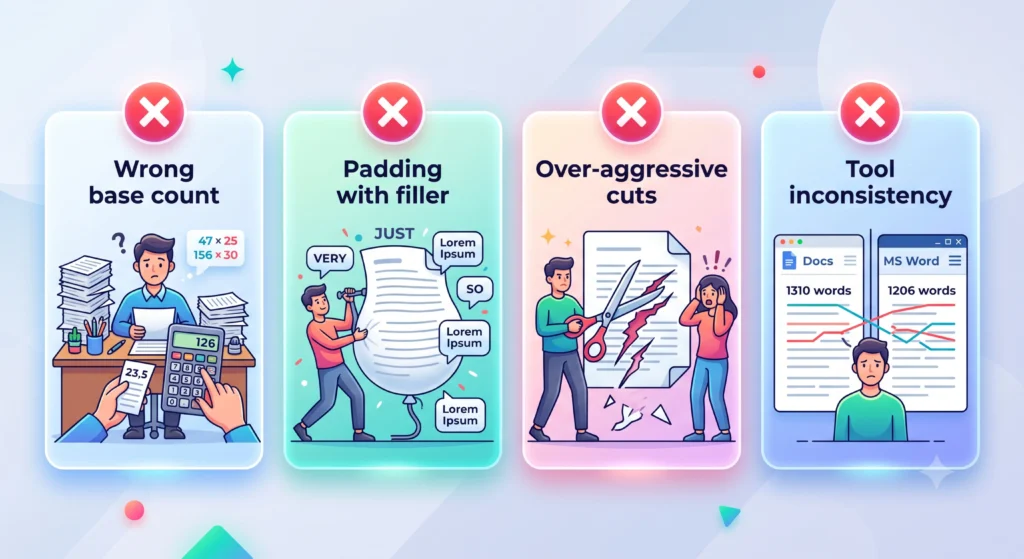
- Mistake 1: Not confirming whether the title, headers, and references count toward the total this alone can create a gap of several hundred words between your assumption and the actual requirement.
- Mistake 2: Padding with filler instead of substance, which is usually easy for an experienced reader or grader to spot.
- Mistake 3: Cutting so aggressively to meet a lower limit that clarity or necessary detail is lost in the process.
- Mistake 4: Assuming every tool counts identically some word counters treat hyphenated words as one word, others count them as two, which can cause small discrepancies between different tools.
Key Terms Related to Word Count
- Word Count: The total number of space-separated words in a piece of text.
- Character Count: The total number of individual characters in a text, including or excluding spaces depending on the counting method used.
- White Space: The spaces, tabs, and line breaks within a text included in character counts that count “with spaces” and excluded in counts that count “without spaces.”
- Reading Time: An estimated duration to read a piece of text, calculated by dividing word count by an average reading speed, typically around 200–250 words per minute.
- Word Density: The frequency of a specific word or phrase relative to total word count, a concept commonly used in SEO content analysis.
Frequently Asked Questions About Word Count
Q1: How do I count words in a document without an app? Use the manual estimation method count the words in a few representative lines, find the average, and multiply by the total number of lines. For an exact count, an online word counter is faster and more accurate.
Q2: What is the difference between word count and character count? Word count measures the number of space-separated words. Character count measures every individual letter, number, and symbol, which is why platforms like X limit posts by character count rather than word count.
Q3: Does word count include the title? This varies by requirement. Always confirm with your instructor, publication, or platform guidelines whether the title and headers are included in the stated word count.
Q4: How many words should a cover letter be? Most hiring guidance recommends 250–400 words for a cover letter long enough to make your case, short enough to be read in full.
Q5: How can I quickly reduce my essay word count? Remove redundant phrases, combine short sentences, cut unnecessary adjectives and adverbs, and keep only your strongest supporting example for each point.
Q6: What is a good word count for a blog post for SEO? Competitive topics often benefit from 1,500–2,500 words, but the right length depends on how thoroughly you can answer the search intent comprehensive coverage matters more than hitting a specific number.
Q7: Do word counters count hyphenated words as one or two words? This varies by tool. Some treat “well-known” as one word, others count it as two. Small differences like this explain minor discrepancies between different word counters on the same text.
Q8: How many words is a typical novel? Most novels fall between 70,000 and 100,000 words, though this varies significantly by genre fantasy and science fiction often run longer, while some literary and YA novels run shorter.
Q9: Is there a word limit tolerance for academic essays? Many institutions allow roughly 10% above or below the stated limit, but this is not universal always confirm the specific policy with your instructor rather than assuming.
Q10: Is the InnovaiTools Word Counter free and accurate? Yes, completely free with no sign-up required. It provides real-time word count, character count, sentence count, and reading time, calculated directly in your browser.
Final Thoughts
Word count will always be part of writing whether it’s a strict academic requirement, an SEO best practice, or simply respecting a reader’s time. The goal isn’t to obsess over hitting an exact number, but to understand what a reasonable range looks like for your specific type of writing, and to have reliable tools and techniques ready when you need to expand or trim.
For an instant, accurate count anytime you’re drafting, editing, or double-checking a submission, use our free Word & Character Counter at InnovaiTools and pair it with our Reading Time Calculator whenever you want to know exactly how long your content will take readers to get through.

Arid is a web developer and computer expert who specializes in building practical utility web applications. With a strong focus on technical problem-solving and user experience, he develops efficient online calculators and writing tools designed to help students, bloggers, and professionals streamline their daily tasks.